01
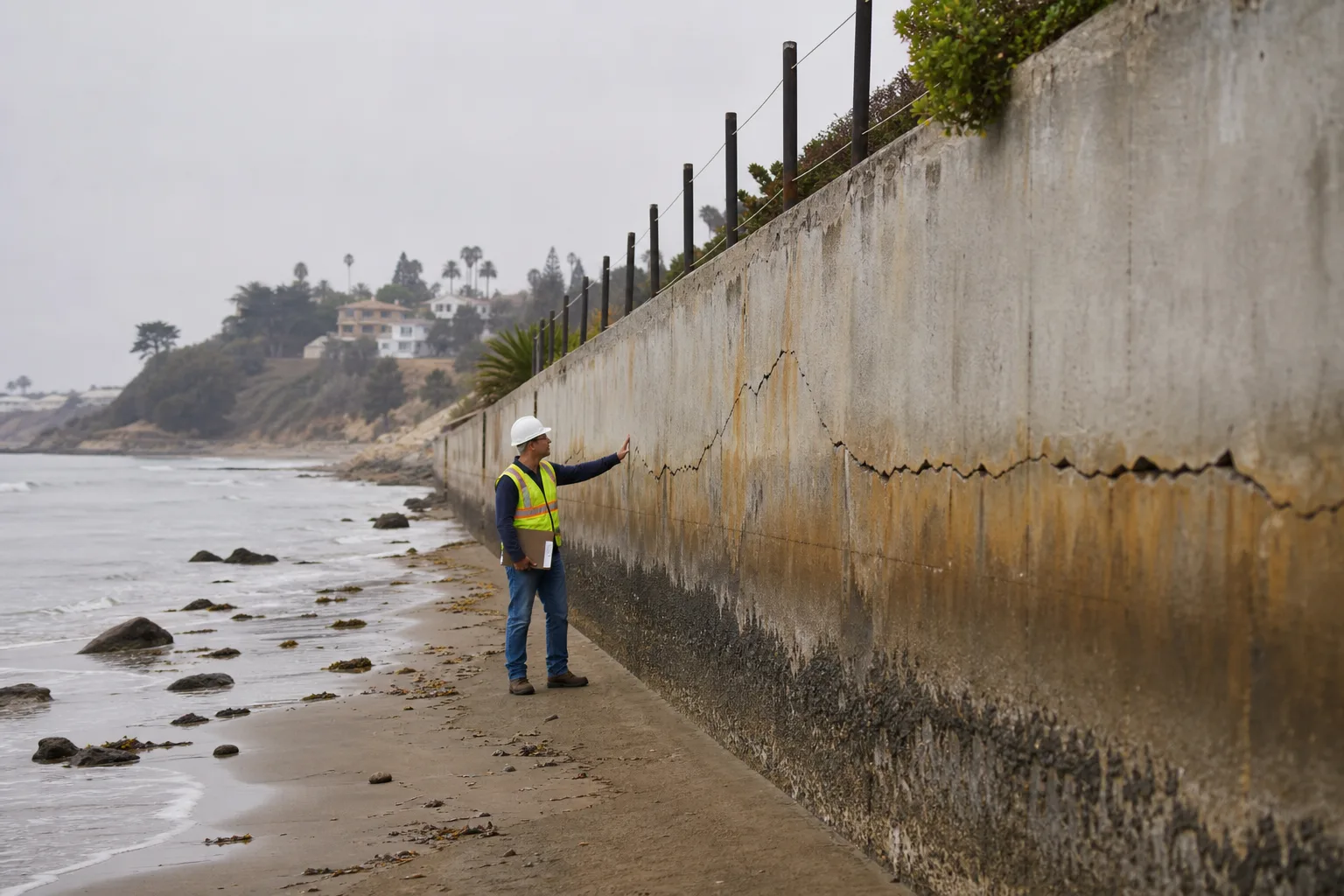
Condition-led coastal structure repair
Seawall Repair
Evaluate the wall face, joints, cap, toe, drainage, backfill, anchors, access, and exposure before selecting a repair method.
Explore this service →Coastal repair planning for local properties
Coastal structure planning for seawalls, bulkheads, caps, tiebacks, erosion, and marine access along the Santa Barbara and Ventura shoreline.
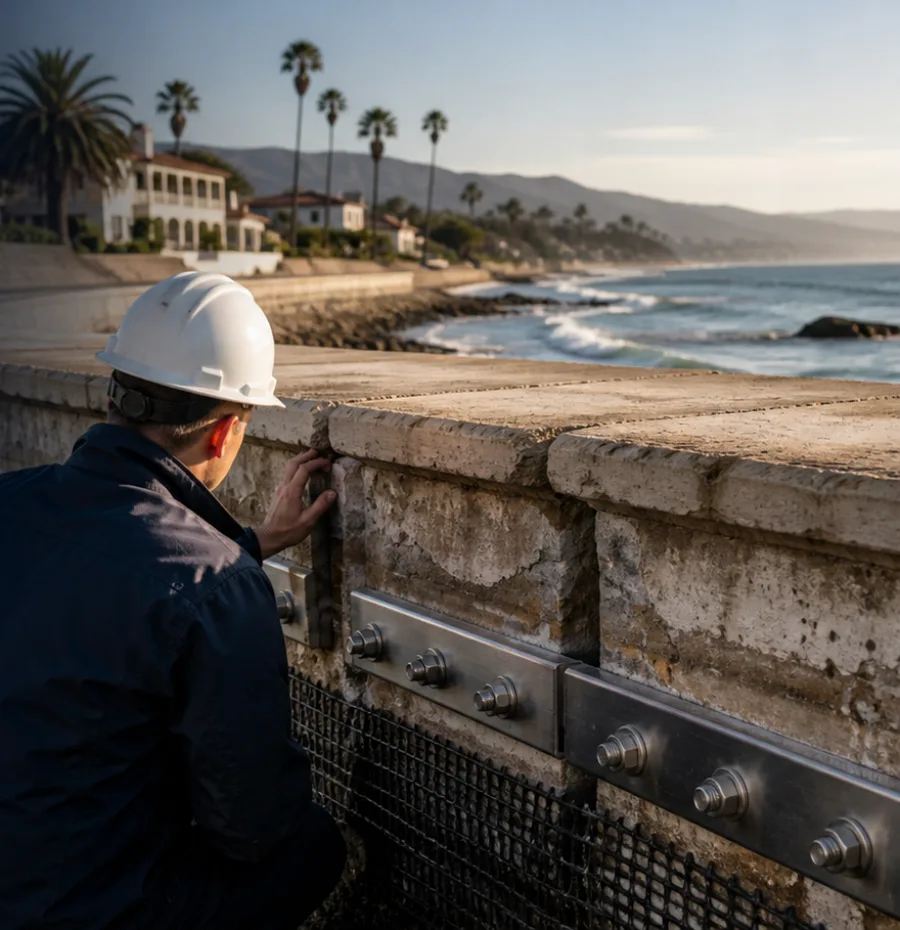
Inspect before repair
Coastal structure planning for seawalls, bulkheads, caps, tiebacks, erosion, and marine access along the Santa Barbara and Ventura shoreline. The most useful first review considers access, preparation, materials, schedule, exclusions, and what success should look like when the work is complete.
Featured services
Explore project-specific guidance, common warning signs, scope elements, and the details a provider should verify before final pricing.
Condition-led coastal structure repair
Evaluate the wall face, joints, cap, toe, drainage, backfill, anchors, access, and exposure before selecting a repair method.
Explore this service →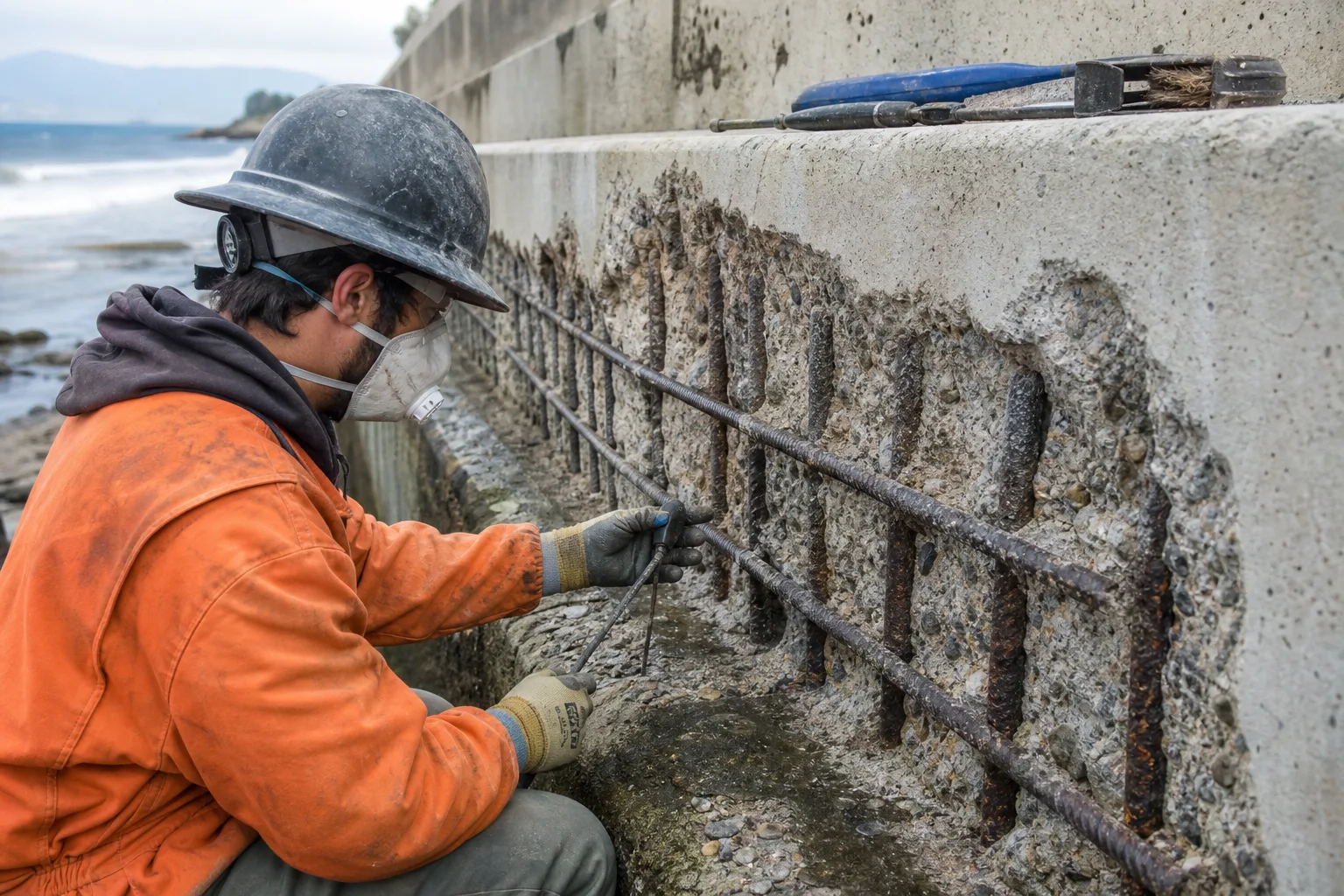
Replace systems that no longer justify patching
Plan alignment, material, toe, cap, anchors, drainage, backfill, temporary protection, marine access, and approvals for a new wall system.
Explore this service →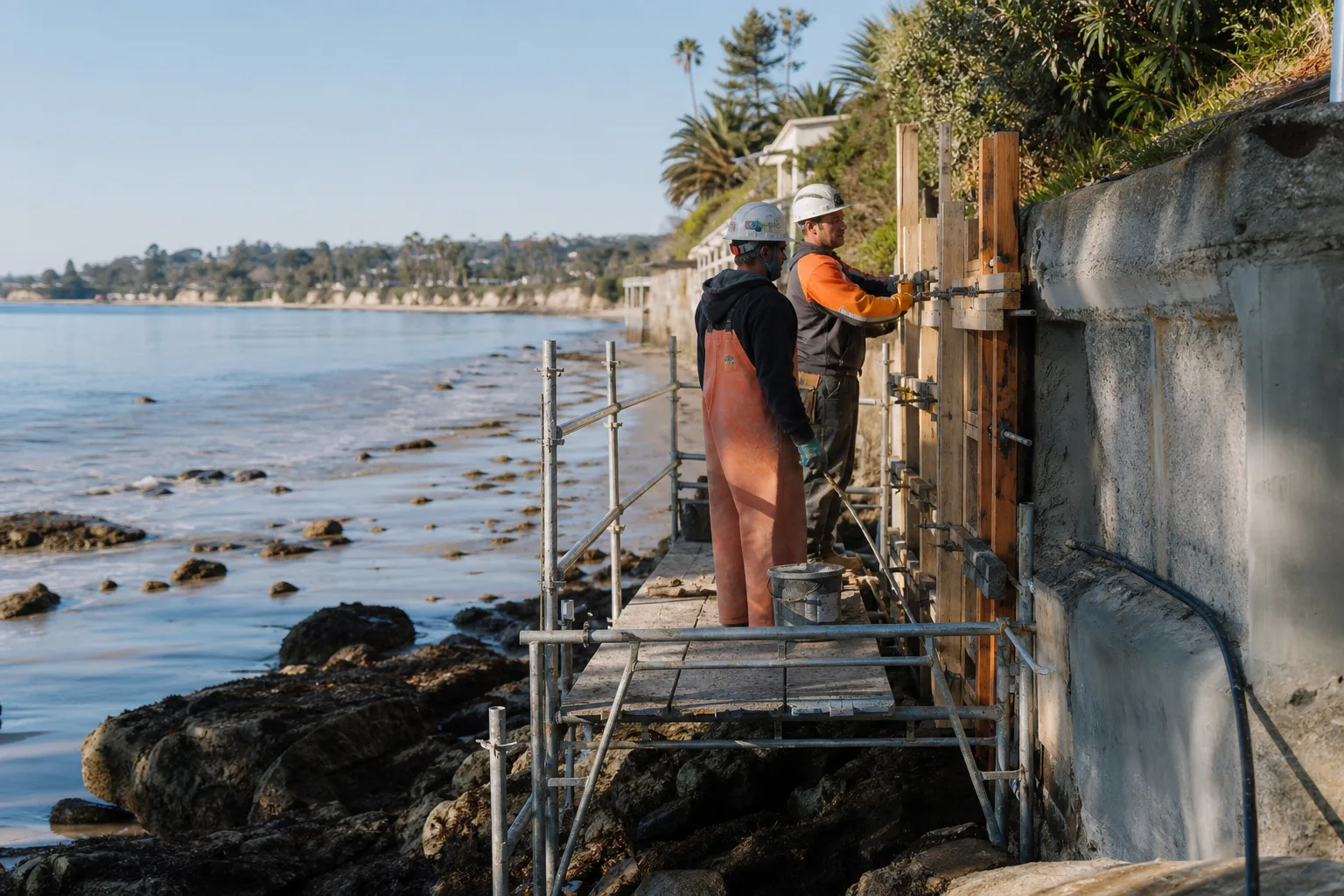
Stabilize waterfront retaining structures
Investigate panel, wale, cap, tie-rod, anchor, joint, drainage, and backfill conditions around canals, harbors, and protected water.
Explore this service →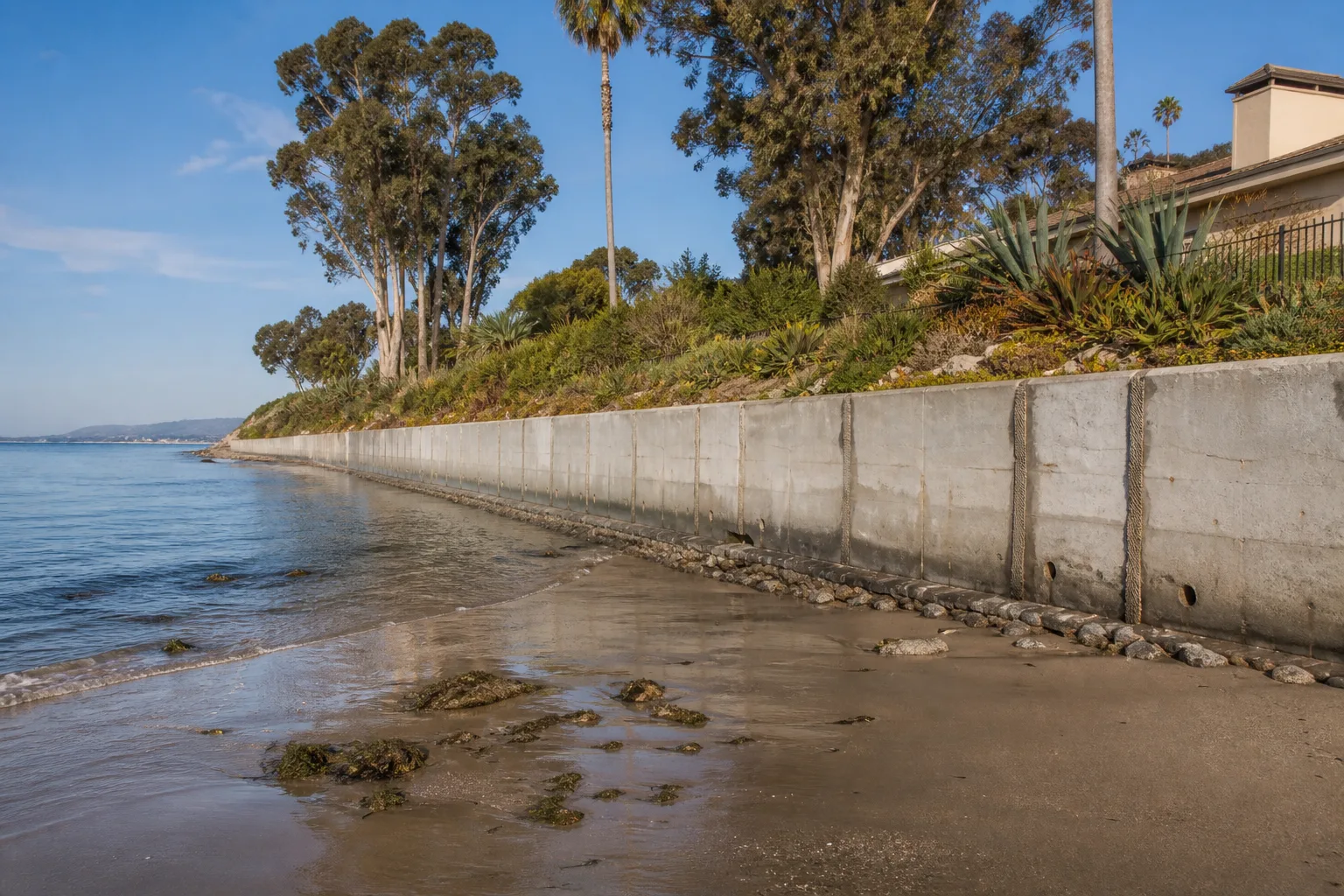
Address concrete and reinforcing distress
Map cracks, delamination, spalls, corrosion, joint failure, chloride exposure, and section loss before choosing repair materials and protection.
Explore this service →Corrosion-resistant sheet-pile systems
Evaluate drivability, embedment, exposure, alignment, interlocks, cap, anchors, utilities, access, and site-specific approval for vinyl sheet pile.
Explore this service →Restore the structural top of the wall
Determine whether cracking, corrosion, displacement, tie-in failure, drainage, or wall movement is driving cap distress before repair.
Explore this service →Investigate buried restraint systems
Assess wall movement, wale and rod condition, anchor capacity, corrosion, access behind the wall, utilities, and temporary support needs.
Explore this service →Document condition before selecting work
Combine records, measurements, visual mapping, sounding, drainage review, underwater observations, and engineering judgment into priorities.
Explore this service →Protect soil and manage wave energy
Plan stone size, bedding, filter fabric, toe geometry, slope, drainage, access, habitat constraints, and transitions to neighboring shoreline.
Explore this service →Marine access and support structure work
Inspect piles, framing, decking, hardware, utilities, connections, flotation, corrosion, loading, vessel clearance, and marine access.
Explore this service →Santa Barbara shoreline
Local weather, soils, access, property patterns, and approval requirements influence both the method and the schedule.
Explore the service area01wave exposure and storm-driven water levels that vary sharply by site
02salt, moisture, and chloride exposure that accelerate corrosion and concrete distress
03public-agency, coastal, environmental, and property approvals that can control the schedule
04limited equipment access between structures, bluffs, roads, beaches, and neighboring parcels
05backfill loss and drainage pressure that may be hidden behind the visible face
06tides, surf, habitat windows, and marine safety requirements that shape field work
From question to written scope
Send the location, use, timing, photographs, and the condition that prompted the request.
The responding provider verifies quantities, access, preparation, and related work before final pricing.
Review materials, schedule, closures, exclusions, credentials, and the plan for changes.
Keep product information, photos, dates, and maintenance notes with the property record.
Nearby coverage
Frequently asked questions
Cost depends on length, height, water depth, access, material, failure mode, backfill loss, cap and tieback condition, engineering, permits, environmental controls, mobilization, and whether work must occur from land or water. An inspection is required for a meaningful range.
The visible wall is only part of the system. Marine access, temporary support, excavation, dewatering, corrosion, anchors, backfill, equipment, engineering, environmental protection, tides, and permitting can all control the scope.
The right method depends on whether the primary issue is cracking, spalling, joint loss, toe scour, cap failure, corrosion, panel damage, anchor distress, drainage pressure, or soil loss. Repairs should address the mechanism, not only the exposed symptom.
Work hours and approvals depend on jurisdiction, property, permit conditions, coastal or harbor rules, environmental restrictions, and neighborhood requirements. Confirm the exact address and approval path before setting a start date.
Replacement may be considered when the system has widespread structural deficiency, recurring soil loss, failed anchors, severe material deterioration, inadequate geometry, or repair access that approaches the complexity of new construction. An engineer should evaluate the specific wall.
Photos help triage visible symptoms but do not show buried anchors, internal corrosion, toe conditions, backfill voids, underwater damage, or drainage pressure. A field assessment may require measurements, sounding, probing, survey, dive work, or engineering analysis.
Start with the site
Call now, or send the visible issue, property area, timing, and photos. Confirm provider credentials before hire.